Outdoor game sets are the part of a backyard party that work when the drinks and the music have run out of things to say. We have been writing about them since 2008, and the honest finding has not changed: the right two sets will carry a four hour afternoon with a mixed group better than any playlist. The wrong set, usually the cheap MDF cornhole kit from the big box store, sits in the garage all summer.
This is our shortlist. We are opinionated on two of them, and lightly opinionated on the rest.
What actually makes a party game set work
A party game is not a sport. The thing we grade on is whether the game keeps playing when the beer is in the way, when the sun is going down, and when a cousin who has never heard of the game walks up ten minutes in. The sets that fail that test share two traits: they take too long to set up, or they punish a bad throw so hard the new player quits after one round.
The sets that pass share three traits.
They set up in under 60 seconds, by one person, with no tools. If the host has to kneel in the grass with a cordless drill, the game stops being a party game.
They have a learnable skill floor. A first time player should score within two rounds and win a round within six. Cornhole clears this. Bocce clears this. Dart cricket does not.
They play without a scoreboard. The whole table needs to know who is up without a referee. Cornhole and giant jenga do this on vibes. Horseshoes does if the ringers are called out loud. Washer toss does with a chalkboard on the box.
Everything else is a nice to have.
The two sets we would buy first
For a party house that will host a dozen afternoons a year, the first two sets are cornhole and a giant tumbling tower. Together they cover throwing, team play, standing play, drama, and small kids. They are also the two the house can keep set up without blocking any part of the lawn.
Cornhole, the one game that pays for itself
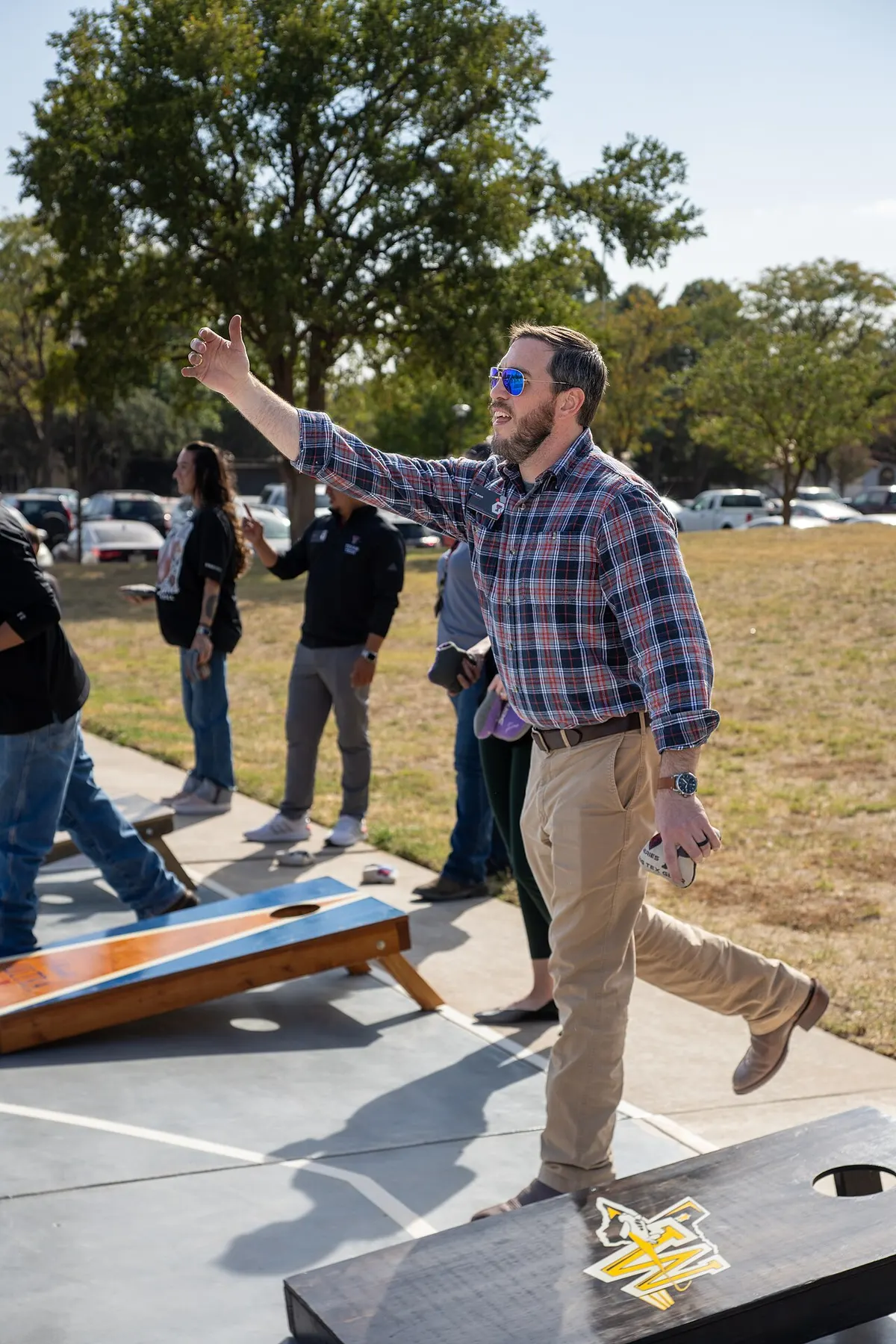
Cornhole is still the king of the backyard. Regulation boards are 48 inches long by 24 inches wide, with the holes placed at the right spot to make a scored toss feel earned without feeling impossible. A toss that lands on the board scores one point. A toss through the hole scores three. First team to 21, exact or cancellation scoring. See our full breakdown of cornhole rules and scoring for the format and the official regulation distance.
 CornholeAce Red Zone ACE Pro Series. Baltic birch plywood tops over a solid pine frame, regulation 48 by 24 inch boards with mitered corners and retractable legs. Bounce-free surface, double-wide support beams under the drop zone, and the only tournament-grade board we have seen that comes out of the box flat enough to play on day one. Made in USA. This is the set we would buy for a house that plays every weekend of summer.
If $350 is more than you want to spend on a yard game, our full best cornhole boards roundup covers budget picks under $120 and the mid-range furniture-grade sets around $200. Either tier plays fine for a cookout. The jump to tournament-grade only matters if the house is hosting a league night.
Giant Jenga, the small yard star
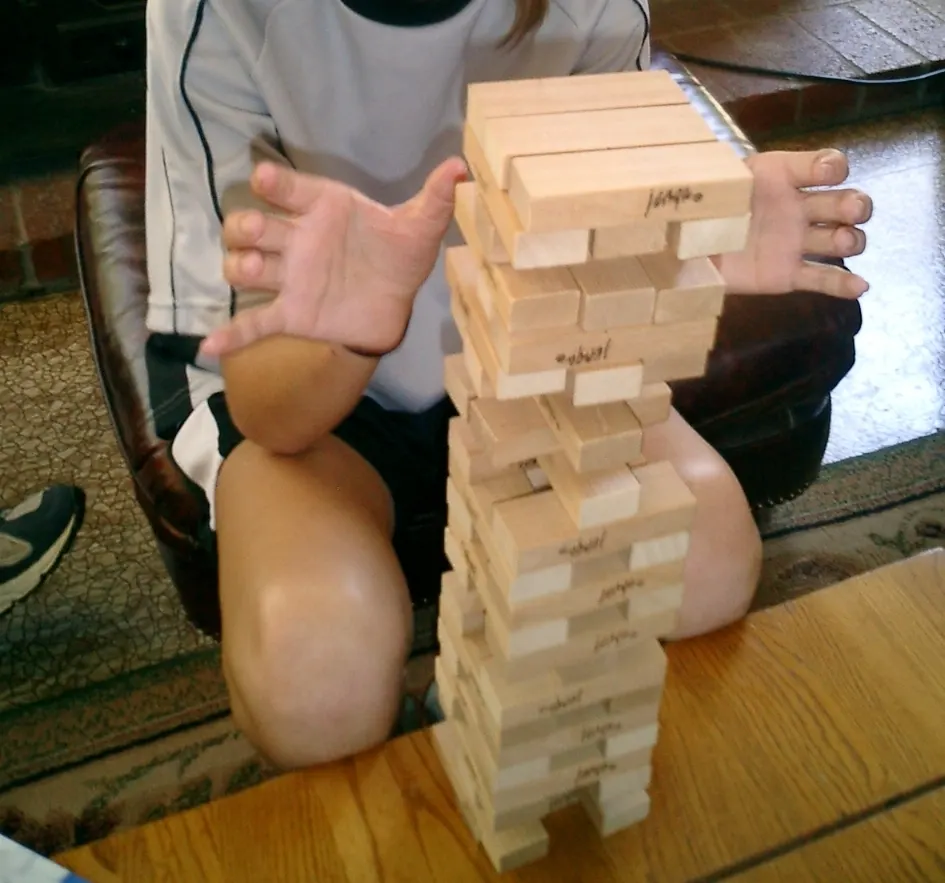
Giant Jenga is what we tell new homeowners to buy first. It fits any patio, scales from two players to a crowd standing around it, and the slow dread of the leaning tower reads to a bystander better than any throwing game ever will. Our full giant Jenga guide compares the real licensed hardwood set against the pine stacker and a DIY 2x4 build.
 GoSports Giant Wooden Toppling Tower. 54 kiln-dried natural pine blocks, 2.5 foot starting height, stacks past 5 feet when the game is going well, canvas carry case included. The pine blocks slide more cleanly than any import stacker we have tried, and the carrying case means the whole tower lives in the trunk between parties. For the price, nothing else gets close.
The other games worth owning
Those two cover most parties. If the house is hosting an all day event, or the yard has room for a true throw lane, these five earn their shelf space.
Ladder golf, also sold as bolo toss or ladder ball, is a two piece set with a 3 rung ladder on each end of a 15 foot lane. Bolos score 1, 2 or 3 points depending on the rung they wrap. We prefer the PVC and nylon-strap versions over the plastic snap-together sets, which flex in a breeze. See our ladder golf rules and scoring, or build your own from 10 feet of PVC for about $25.
Washer toss is the sleeper pick of the lineup. Two 16 by 16 inch boxes with a 4 inch cup set 25 feet apart, four washers per team. 1 point on the box, 3 in the cup, 5 for a hanger that lands halfway in. The game is more forgiving than horseshoes and more exciting than bags because the metal washers ring the cup like a bell. Rules and distance in our washer toss rules write-up, and the washer box build is a two hour afternoon with a jigsaw.
Bocce is the quiet favorite at a wine-forward party. 8 heavy resin balls, 1 pallino target ball, no board, no setup. A regulation 107mm set weighs enough to roll true on grass. Bocce rewards precision but forgives the first few throws, which is why it is the one game at a mixed-age cookout that everyone can play on round one. The downside: cheap sets ship with scratched balls or an off-weight pallino, so a mid-tier $70 set is the floor we would spend.
Spikeball, officially called roundnet, is a different animal. Four players stand around a trampoline-style net at waist height. The pace is loud and athletic, which makes it the best game of the lineup for a 20-something cookout and the worst one for a group with grandparents watching. One net plus three balls, portable in a drawstring bag.
Horseshoes is the one we still own because the lawn has room for it. Full lane is 40 feet from stake to stake. 1 point for the closest shoe inside 6 inches, 3 points for a ringer. The game is harder to learn than cornhole, but a good pit holds up for decades. Our regulation horseshoe pit build is the one DIY on this list we still think is worth the weekend.
Which set for which yard
| Yard size | Game | Lane length | Setup time | Players |
|---|---|---|---|---|
| Patio or 10x15 ft | Giant Jenga | None | 30 sec | 2 to 8 |
| Patio or 10x15 ft | Bocce | 15 to 30 ft rolling | 10 sec | 2 to 8 |
| 15x30 ft small yard | Cornhole | 27 ft | 60 sec | 2 or 4 |
| 15x30 ft small yard | Spikeball | 10 ft radius | 90 sec | 4 |
| 20x40 ft medium | Ladder golf | 15 ft | 60 sec | 2 or 4 |
| 20x40 ft medium | Washer toss | 25 ft | 60 sec | 2 or 4 |
| 40 ft deep yard | Horseshoes | 40 ft | 30 min pit build | 2 or 4 |
The patio-friendly games are the two to buy first if the house is in a condo, a townhouse or a city rental. The medium-yard games are the ones to add once the house upgrades to a lawn.
How much to spend
Below $75, every outdoor game set we have tried eventually warps, splinters or loses a part. The cheap MDF cornhole kits soften in one wet summer. The import pine Jenga stackers chip at the ends after a season. Below $75 is fine for a bachelor-party rental or a one-time event. It is not fine for a house that wants to own the set for ten years.
The $75 to $200 range is where the recommendation lives for most houses. The GoSports Toppling Tower at $75 is the ceiling for stackers at this tier. Mid-range cornhole lives here. A good resin bocce set is $70 to $120. Ladder golf and washer toss sets land in the lower end.
Over $200 is tournament-grade territory and only pays off if the game lives on the lawn or in a league. For cornhole, that means Baltic birch tops and real tournament-grade boards. For bocce, it means phenolic resin balls that match in weight to within 2 grams. Most backyards do not need either. The ones that do already know who they are.
Quick answers
What is the best outdoor game set for adults? Cornhole, by a wide margin. It plays on any lawn, any skill level can score within two rounds, and games last the right amount of time for a drink in hand. A regulation 48 by 24 inch wooden set runs around $350 for the tournament-grade boards, or you can build one from a half sheet of plywood for about $80.
What size yard do you need for outdoor party games? Cornhole needs 33 feet from front board to front board. Washer toss, ladder golf and horseshoes all fit a 25 to 40 foot throw lane. Giant Jenga and bocce need less than a quarter of that footprint, so they are the first pick for small patios, side yards and townhouse backyards.
Are expensive cornhole boards worth it over a cheap set? For weekly use, yes. Tournament boards use Baltic birch plywood on a solid pine frame, land bags without bouncing off, and keep level legs for ten plus years. Cheap MDF sets warp after one wet season and go soft under the bags, which turns every throw into a lottery. If the boards live indoors between uses, a mid-range set at around $200 is the sweet spot.
What’s the best outdoor game for a small backyard? Giant Jenga and bocce. Both play in a 15 by 10 foot area, both scale from two players to a crowd, and neither needs a throw lane. Giant Jenga reads to a crowd better because the tower is dramatic as it grows.
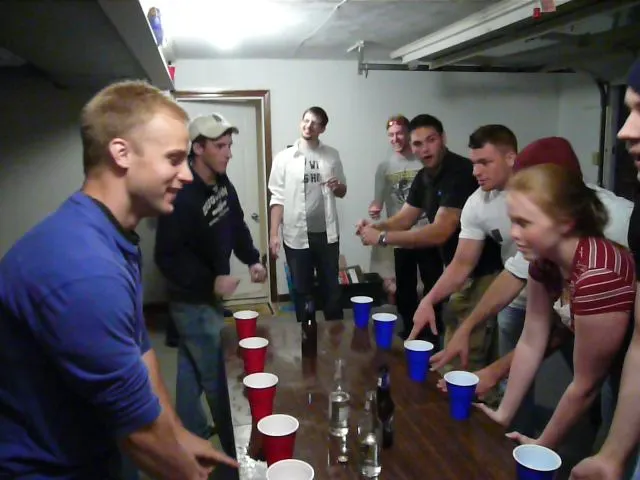
How do we add drinks to outdoor games without turning it into a drinking game? Keep the cups separate. Set a water station near the game and let each player grab what they want between turns. The games we recommend score themselves on skill, not on who finishes a cup, which is also what makes them actually fun for a mixed group with drivers, pregnant friends and sober folks in the mix.
The lineup, ranked
If we were putting together one shopping cart for a new homeowner who wants a backyard that actually sees weekend use, this is the order we would hit buy on: cornhole first, giant tumbling tower second, washer toss third, bocce fourth. The first two set up in a minute and play with any crowd. The second two scale up for a long afternoon with room to spread out. Everything else is a nice to have, and the house will know within one summer which one to add next.
For the deeper write-ups, start with best cornhole boards and giant Jenga, then move to best beer pong tables if the party moves indoors as the sun drops.