The espresso martini came out of a late-night request at a London bar in 1983, from a model who told Dick Bradsell she wanted something to wake her up and mess her up. He grabbed vodka, pulled a shot of espresso next to his station, added a little simple syrup, and shook it on the rocks. He called it the Vodka Espresso. It did not have a drop of coffee liqueur in it. Four decades later, the espresso martini is the most-ordered cocktail at American bars after the margarita, and nine out of ten of them are sweeter, foamier, and more vanilla-forward than the drink Bradsell served that night.
We have been making espresso martinis since the kitchen in our apartment held a secondhand De’Longhi and a jar of Nescafé Clásico. The crew’s shortlist of mistakes we have personally made with this drink is long: cold espresso, pre-ground coffee from a tin, flavored vodka, dry shaker instead of wet, two squirts of vanilla syrup, cold brew with no bloom, the works. The recipe below is the one that works every time, and the quick-answers section at the bottom is for the moments when it does not.
Responsible-drinking note: this is a strong, caffeinated drink. One is a nightcap. Two is dessert. Three is a bad decision wearing a tuxedo. Serve with water and know your limits.
What is the actual espresso martini recipe?
Here is the version we land on after the research pass, the version Difford’s Guide publishes, and the one most working bartenders in London and New York pour today:
- 2 oz vodka
- 1 oz fresh hot espresso (a double shot, pulled within 60 seconds of shaking)
- 1 oz coffee liqueur (Mr Black is our house pour; Kahlúa works)
- 0.25 oz rich simple syrup, optional, only if the liqueur runs dry
Shake hard with ice for 15 to 20 seconds. Double strain into a chilled coupe. Float three coffee beans in a triangle on the crema cap.
The 2-1-1 ratio does two things at once. The 2 oz of vodka is the backbone, giving the drink enough alcohol to feel like a cocktail instead of iced coffee. The 1 oz of hot espresso brings bitterness, body, and the oils that frost the foam cap. The 1 oz of coffee liqueur covers sweetness, aroma, and the second coffee note. Drop any of those three to half an ounce and the drink falls apart in a predictable way: too thin, too bitter, or too candy-flat.
The optional quarter ounce of rich simple is there for one reason. Mr Black and Galliano Espresso are drier than Kahlúa, and a drier liqueur with a bitter espresso shot can land flat and tannic. A splash of 2:1 syrup lifts the finish. Taste the espresso before you pour; if it is single-origin, light-roasted, or especially acidic, use the syrup.
Why does the foam matter, and how do you get it?
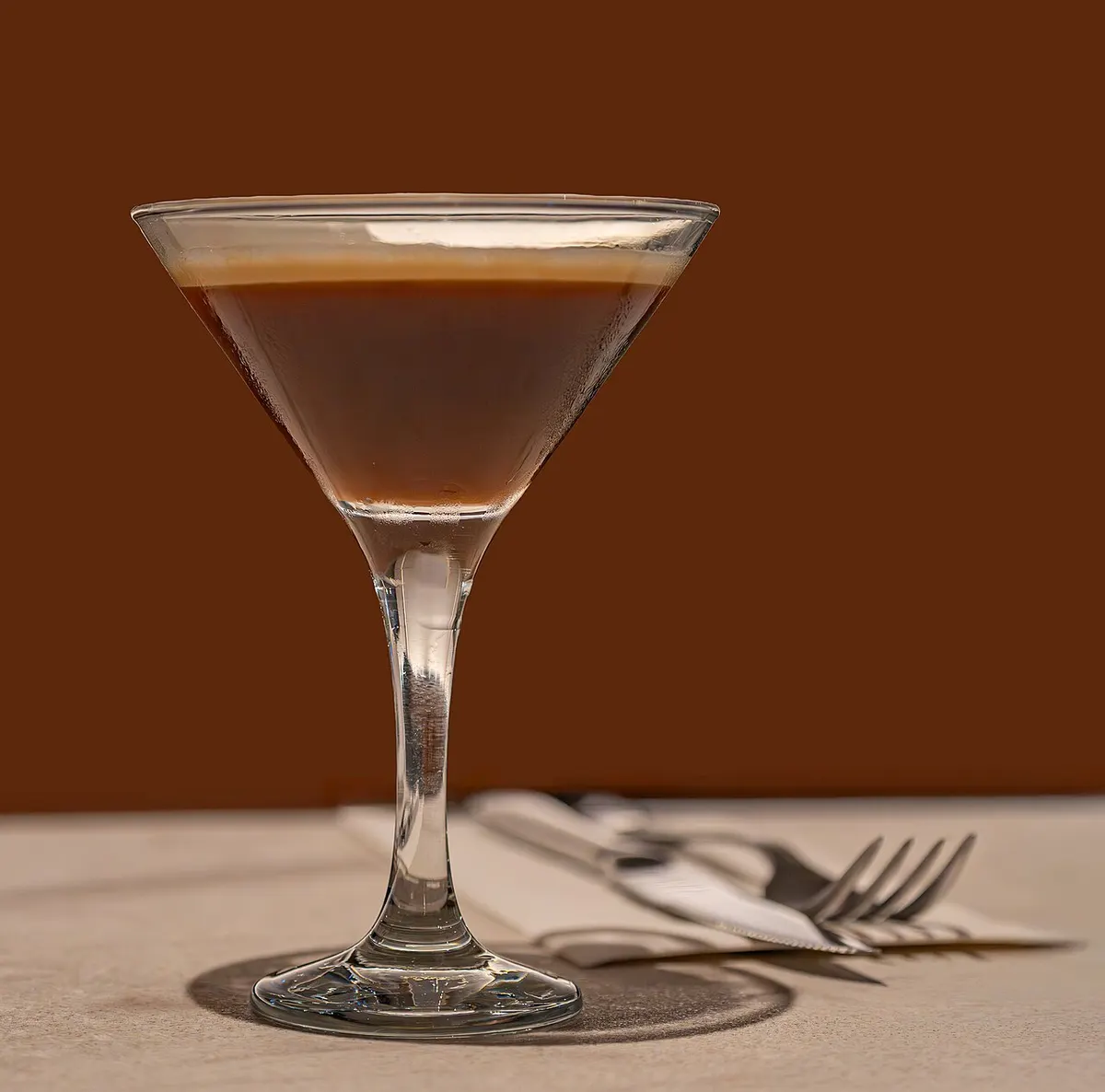
The crema cap is the espresso martini’s signature. A good one looks like Guinness head poured into a coupe: thick, pale caramel, holding three coffee beans in place for the length of the drink. A bad one looks like iced coffee with a thin brown film on top, which drinks fine and reads flat.
The foam is not from the vodka or the liqueur. It is dissolved CO2 and lipid-rich oils in a fresh espresso shot, agitated hard enough with ice to force them into a stable emulsion. The crew’s rules for getting there every time:
Fresh espresso, pulled within 60 seconds of shaking. The crema on top of a fresh shot is where almost all of your foam comes from. Let the shot sit for two minutes and the crema collapses. Let it sit five minutes and you have brown coffee water.
Cold ice, not cracked or cushy. Fresh dry cubes bite the liquid harder than old wet ones. If your freezer ice has been sitting in the tray since Thanksgiving, it is holding water on the surface that dilutes before it chills.
Shake hard for 15 to 20 seconds. Not “a few shakes.” Shake until the tin frosts over and your forearms notice. Half the sad espresso martinis in the world are from a soft, polite shake.
Double strain. The spring from the shaker catches the ice shards. The fine mesh catches the micro ice and the coffee grounds. Both matter: ice fragments on top collapse the foam within thirty seconds, and visible grounds look wrong.
Which vodka should you use?
Most of the vodka ends up masked by espresso and coffee liqueur, so this is not the place to pour your treasured bottle. But cheap vodka with a harsh ethanol finish does show up on the back palate, especially the second sip.
We pour Tito’s, Reyka, Ketel One, or Absolut Elyx when they are in the house. Any of those four is reliable at a mid-shelf price. Potato vodkas tend to add a touch of creamy weight that reads nicely in this drink; Chopin and Vestal both play well.
Avoid flavored vodkas. Vanilla vodka is the most common mistake, and it is the thing that drags an espresso martini into dessert territory. The sweetness is already there from the coffee liqueur. Add more and you are drinking a Starbucks Frappuccino with a hangover attached.
Hot espresso or cold brew: which is right?
The debate has three legitimate camps and we have run all three for the Drink101 crew at various dinner parties over the years.
Hot espresso is the bar classic. Fresh shot, 60-second window, maximum crema, slight bitterness. If you own an espresso machine or a Moka pot, this is the version to run.
Cold brew is the smoother alternative. Less bitter, lower acid, more roasty-sweet. It also makes almost no foam without a dry shake first, because there is no crema to agitate.
Instant espresso bloomed in warm water is the home shortcut. Mix 1 teaspoon of good instant espresso (Medaglia d’Oro, Illy, or Nescafé Azera) with 1 oz of warm, not boiling, water. You get bitterness and some foam, no fresh-pulled oils. Better than cold brew for foam, worse for flavor.
Our ranking: hot shot from a Moka pot or machine, then instant espresso bloomed, then cold brew with a dry shake, then cold brew without. If you are serving a crowd, pull all your shots into a thermal pitcher held under 180°F and shake drinks in rapid succession; crema holds in a thermal pitcher for about 10 minutes.
| Coffee source | Foam quality | Flavor | Setup time |
|---|---|---|---|
| Fresh hot espresso | Excellent (crema cap) | Classic, slight bitterness | 2-3 min to pull |
| Moka pot | Very good | Darker, richer | 5 min on stove |
| Cold brew + dry shake | Good | Smooth, less bitter | None (prep ahead) |
| Instant espresso bloomed | Decent | Flat but passable | 30 seconds |
| Day-old espresso | None | Stale, tannic | Don’t |
 Bialetti Moka Express, 6-cup. If you don't own an espresso machine, this is the cheapest way to pull real espresso at home. Not quite 9-bar pressure, but 1.5 bars is enough to produce proper crema when the coffee is fresh. We've used ours since 2008; it has outlasted three toasters.
Which coffee liqueur is best?
Mr Black is the modern bar standard. Australian, cold-brew-based, 23% ABV, roughly $35 for 750ml, dry enough to be a cocktail ingredient instead of a dessert topping. If you make this drink more than once a month, buy a bottle. It also drinks straight over an ice ball when you give up on cocktails for the night.
Kahlúa (20% ABV, around $25) is the bar substitute that pays rent. It is sweeter and more vanilla-forward than Mr Black, which some people prefer and some people find syrupy. A good test: pour a half-ounce of each on a spoon and taste side by side. If Kahlúa reads like a dessert and Mr Black reads like a drink, you know which camp you are in.
Galliano Espresso (28% ABV, around $34) is drier and more intense than Mr Black. Difford’s Guide uses this one in its canonical recipe. If you like your espresso martinis closer to a Boulevardier in balance, this is the swap.
Borghetti (25% ABV, around $29) is the Italian specialty: aggressively coffee-forward, no vanilla, almost tannic. The espresso martini for people who think most espresso martinis are too sweet.
Patrón XO Café exists and we would not pour it in a martini. It is a tequila-based coffee liqueur that reads great in a shot but overpowers the vodka in this drink.
The step-by-step build
Chill a coupe or Nick & Nora in the freezer for at least 10 minutes. Thin stem, wide bowl, 5-6 oz capacity. A V-shaped martini glass works, but the shape doesn’t support the foam as well.
Pull a double shot of espresso directly into your shaker tin, or decant it from the moka pot while still hot. Set a 60-second mental timer; after that, crema is collapsing.
Pour 2 oz vodka, 1 oz coffee liqueur, and the espresso into the shaker. If you are using the quarter-ounce of rich simple syrup, add it now. Smell everything before you add ice; the shaker should smell like a coffee shop that just opened.
Fill the shaker two-thirds with fresh dry cubes. Seal and shake hard for 15 to 20 seconds. The tin should frost completely over.
Double strain into the chilled coupe. Spring strainer first (built into most shakers), fine mesh second to catch micro-ice. The foam should rise above the rim as you pour.
Float three coffee beans on the foam in a triangle. The classic three represent health, wealth, and happiness. The practical reason is that fewer than three looks sparse and more than three looks cluttered.
 Semderm Weighted Boston Shaker Set. Two-tin construction, 28 oz over 18 oz, bamboo stand that keeps it from migrating across the counter. This is the shaker style serious espresso martini bartenders use because the big tin holds the ice and the small tin seals tight for the hard shakes. We prefer two-tin Boston over cobbler shakers for anything that needs real foam.
 OXO Steel Double Jigger. 1 oz on one side, 1.5 oz on the other, interior markings so you don't have to squat and squint. The 1.5 oz side is exactly what you want for the vodka pour; the 1 oz side handles the espresso and the liqueur. Under $15 and we have beat ours up for years.
 Barfly 40cm Bar Spoon with Strainer End. The strainer-end version doubles as a fine strainer when you don't own one, which is the exact scenario half of us are in when we start making this drink. The 40 cm length also reaches the bottom of a tall mixing glass if you move on to stirred drinks later.
Four variations worth making
The classic 2-1-1 is the one we recommend first. These four are worth trying once you have the baseline nailed.
The Mr Black White Russian. Swap half the vodka for cream (so 1 oz vodka, 1 oz cream, 1 oz espresso, 1 oz Mr Black). Shake, strain, no coffee bean garnish. Rounder, richer, closer to a milkshake.
The Oaxacan. Swap the vodka for mezcal (reposado tequila works too). The smoke in mezcal pairs with espresso the way smoke pairs with chocolate. Half ounce of agave syrup instead of simple. Easier to drink than you’d expect.
The Dirty Pharmaceutical. This is Bradsell’s own 1998 version from the Pharmacy restaurant: 2 oz vodka, 1 oz espresso, 0.5 oz Kahlúa, 0.5 oz brown sugar syrup, 2 dashes orange bitters. Served on the rocks, not up. Darker, more old-fashioned-adjacent.
The Hazelnut Espresso Martini. Swap the coffee liqueur for Frangelico. Lose the pretense of calling it a classic espresso martini; this is dessert, and it is excellent. Grate nutmeg over the foam.
Common screw-ups and how to fix them
Flat drink, no foam. Espresso wasn’t fresh, you didn’t shake hard enough, or you used cold brew without a dry shake. Fix: pull a new shot, shake harder, longer.
Watery, over-diluted. Shaker was warm, ice was wet, or you shook over 25 seconds. Fix: chill the shaker tin for 30 seconds in the freezer before you start.
Too sweet, cloying finish. Too much coffee liqueur, or Kahlúa with a sweet syrup added. Fix: drop the simple syrup, use Mr Black instead of Kahlúa, or cut the liqueur to 0.75 oz.
Too bitter, tannic. Espresso was over-extracted or old. Light-roasted single-origin coffee is especially prone to this. Fix: add a half-barspoon of rich simple, or switch to a medium-dark blend like Illy or Lavazza Super Crema.
Separated layers of foam, drink, and crud at the bottom. You didn’t double strain. Fix: use the fine mesh.
Quick answers
What is the classic espresso martini ratio? 2 oz vodka, 1 oz fresh espresso, 1 oz coffee liqueur. We add 0.25 oz rich simple syrup if the liqueur is dry.
Who invented the espresso martini? Dick Bradsell at the Soho Brasserie in London, around 1983, for a model who asked for something to wake her up.
Hot espresso or cold brew? Hot gives you the crema foam cap. Cold brew is smoother but makes almost no foam without a dry shake first.
Best coffee liqueur? Mr Black for the classic version, Kahlúa if you prefer it sweeter, Galliano Espresso or Borghetti for a drier, more bitter drink.
Why no foam? Stale espresso, soft shake, or cold brew. Fresh shot plus 15-20 seconds of hard shaking fixes it.
How much caffeine? Roughly 75 to 110 mg per drink. One is fine as a nightcap. Three stacked is why you’re awake at 4 a.m.
Can I make it without a shaker? Yes, awkwardly. Use a mason jar with a tight lid, half-fill with ice, shake like you mean it. The foam will be thinner but it works.
Vodka or something else? Vodka is classic. Mezcal, reposado tequila, and even dark rum all work as swaps.
Garnish rule? Three coffee beans on the foam, in a triangle. Traditionally for health, wealth, and happiness. Practically, three is the number that doesn’t look sparse or cluttered.
Where to go from here
If this is your first time making one, start with the 2-1-1 classic and a cheap bottle of Mr Black. Once you have the shake nailed, read our take on home bar essentials to round out the rest of your tool kit, or our rundown of the best cocktail shaker sets if you want to upgrade. Our best mocktail recipes guide covers the NA cream-and-cold-brew version, and if you prefer stirred drinks our negroni recipe is the next place to go.
The espresso martini is a drink that rewards precision. The margin between a great one and a sad one is 90 seconds of fresh espresso and 10 seconds of harder shaking. Get those right and you have a cocktail you will want to make for the rest of your life. Drink responsibly, know when to switch to water, and never serve one after 10 p.m. to someone with a morning meeting.
Sources: Diffords Guide, Espresso Martini, Punch, How the Espresso Martini Became a Modern Classic, VinePair, The Best Frothy Espresso Martini Trick, Tasting Table, The Biggest Mistake to Avoid When Making Espresso Martinis.