A cocktail garnish is a working part. We have been pouring drinks on this site since 2008 and we have thrown away a lot of them: paper umbrellas on bourbon, lavender sprigs on margaritas, a dehydrated lime wheel the size of a coaster that blocked the straw. The ones we kept are the ones that do a job: carry oil, add aroma, build counterpoint, or clean the finish. That is the whole cocktail garnish guide, right there. The rest of this piece is which garnishes earn their place, how to cut them without wrecking them, and the three tools we actually use.
Why do garnishes exist at all?
Flavor you cannot taste from the glass alone. When you lift a cocktail, your nose does most of the work: aroma hits before the first sip, and it reads differently from what is dissolved in the liquid. A citrus peel squeezed over the surface sprays essential oils across the drink. Those oils are oily, so they ride on top instead of mixing in. Every sip then passes through that layer. The drink changes shape.
That is the real reason to garnish. Everything else is downstream.
Aroma. A sprig of mint smacked once between your palms releases menthol into the air around the glass. A grated bit of nutmeg on an eggnog puts the whole kitchen in the drink. These additions never dissolve into the liquid, so the “flavor” is really olfaction.
Counterpoint. A boozy, bitter drink like a Manhattan reads sweeter and rounder with a Luxardo cherry sitting at the bottom. The cherry itself is one bite at the end. The syrup it was packed in diffuses up through the drink across ten minutes.
Signal. A salt rim means margarita. A twist of lemon means something citrus-forward. A luxurious orange peel on a dark drink means stirred and spirit-heavy. Experienced drinkers read these before the glass hits the napkin.
Looks. Dead last. A beautiful garnish on a bad drink is still a bad drink.
Which garnishes are worth your time?
Short list, in order of how often we reach for them.
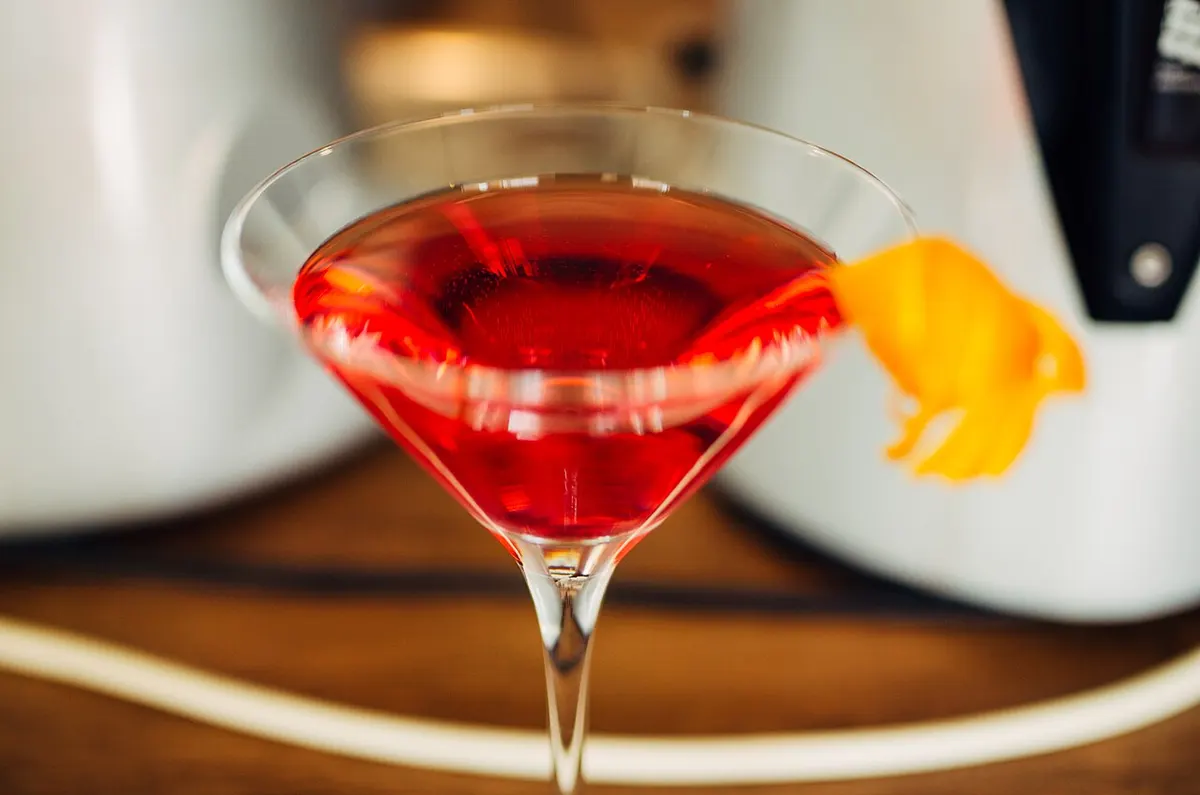
Citrus twists. The core move. A thin strip of lemon, orange, or grapefruit peel, pinched over the drink to express the oils. Works on Martinis, Old Fashioneds, Negronis, Sours, and roughly half of everything else. Takes ten seconds and costs the price of one piece of fruit.
Citrus wheels and wedges. A wheel floats on top as a visual anchor and lets the drinker squeeze more juice in if they want. Wedges go on margaritas, Palomas, Dark ‘n Stormys, and anywhere the drink can take more acid. The rule for both: keep the cut clean and thin enough that the fruit stays translucent.
Luxardo-style cocktail cherries. The dark, syrupy, almost-leathery kind. Not the fluorescent-red bomb cherries. One cherry at the bottom of an Old Fashioned does real flavor work. Two is excess.
Olives. For Martinis and Gibsons. Buy good olives packed in brine, not the dusty jar that has been in the fridge door since the inauguration. A Castelvetrano is a solid default.
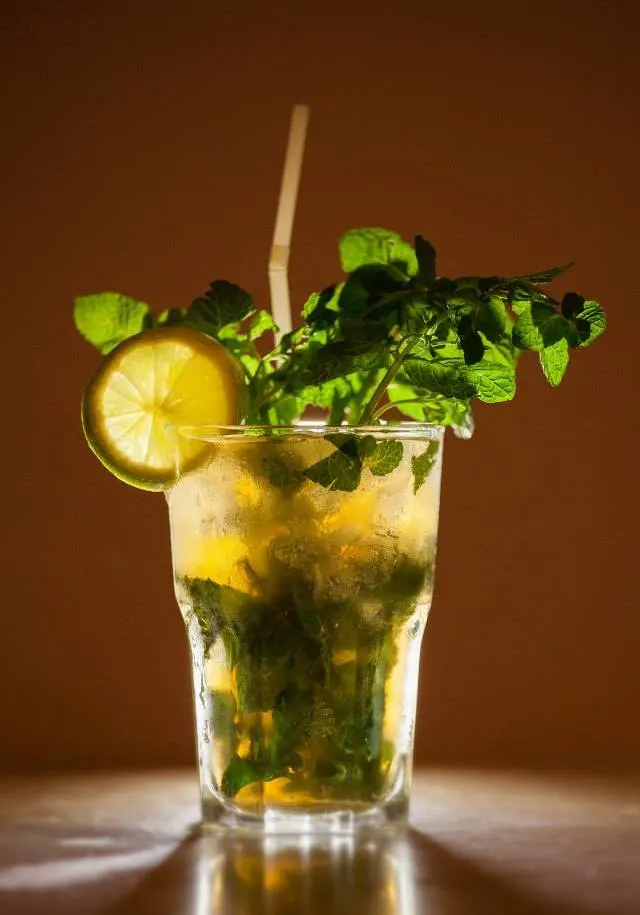
Fresh herbs. Mint on Mojitos and Juleps. Rosemary on gin or whiskey sours, if the drink actually has rosemary in it. Smack the sprig once in your palm before you drop it in; the aromatic oils only release under impact.
Salt and sugar rims. For a margarita (salt), a sidecar (sugar), or a Lemon Drop (sugar). Rim only half the glass so a drinker can choose.
Freshly grated nutmeg. Three or four passes over the surface of an eggnog, hot buttered rum, or a brandy milk punch. Jarred ground nutmeg does nothing.
Which garnishes should you skip?
The ones that do no work. These are the ones we quietly dump before serving.
Paper umbrellas on anything not actively tiki, and tiki is the only room they belong in. Edible glitter: cute on social media, suspension powder on the actual drink. Candied fruit as a bridge over a cup, which is a dessert choice, not a garnish. Rosemary sprigs stuffed into drinks that have no rosemary in them. Dehydrated orange wheels the size of a coaster. Rims the drinker did not ask for. A second cherry when one already finishes the drink.
The rule we come back to: if removing it would not change how the drink tastes or smells, do not add it.
How do you cut a proper citrus twist?
Three parts: pick the fruit, peel the strip, express the oils.
Pick the fruit. Thick-skinned citrus peels cleanly. Standard-grocery navel oranges, Eureka lemons, and Persian limes all work. The thin-skinned Meyer lemons are better for juice than peel: the oil cells are shallower and the strip tears. Wash the fruit before you cut.
Peel the strip. A Y-peeler is the right tool. Press the blade flat against the fruit at a shallow angle, start near the stem end, and pull in one smooth motion to the other end. Aim for a strip about an inch wide and two to three inches long, as little white pith as you can manage. Pith is bitter in the mouth and dulls the oils. If a lot of white pith comes off, lay the strip flat and shave it down with a paring knife.
Vegetable peelers, paring knives, and channel knives all technically work. A channel knife makes a thin curling spiral for garnishing over a rim. We use a Y-peeler for the actual oil-expressing twist, and a channel knife only when we want the ribbon.
Express the oils. Hold the strip skin-side down over the surface of the drink, about an inch above. Pinch both ends between your thumbs and index fingers, then twist in opposite directions. You will see a tiny spray hit the drink surface, and you will smell it the second it happens. Rub the skin side around the rim of the glass to leave oil on the glass too. Then drop it in, lay it across the rim, or discard. All three are valid.
Flaming the peel is a bar trick, not a flavor upgrade. Hold a lit match about three inches above the drink, pinch the peel between the match and the glass, then twist hard. The oil ignites in a flash. It looks fantastic. It also torches off a lot of the volatile aromatics you were trying to add. Save it for a party, do not treat it as the default.
Comparing the citrus garnishes
Which to use where, with how much work each takes.
| Garnish | Best for | What it does | Effort |
|---|---|---|---|
| Lemon twist | Martini, Sidecar, French 75, Whiskey Sour | Bright citrus oil on the nose | 15 seconds |
| Orange twist | Old Fashioned, Negroni, Boulevardier | Rounder, warmer citrus; pairs with bitters | 15 seconds |
| Grapefruit twist | Paloma, Hemingway Daiquiri | Floral, slightly bitter oil | 15 seconds |
| Lime wedge | Margarita, Gin & Tonic, Dark ‘n Stormy | Acid on demand; drinker adds to taste | 10 seconds |
| Lemon wheel | Collins, Tom Collins, lemonade builds | Visual; drinker can squeeze | 10 seconds |
| Luxardo cherry | Old Fashioned, Manhattan, Aviation | Sweet counterpoint; dense syrup bottom-up | None (buy jarred) |
| Olive | Martini, Gibson, Dirty Martini | Savory, salty counter to spirit | None |
| Mint sprig | Mojito, Julep, Southside | Menthol aroma on every sip | 5 seconds (smack it) |
| Fresh nutmeg | Eggnog, Hot Buttered Rum, Alexander | Warm spice aroma | 5 seconds |
The three tools we actually use
Every garnish on this list is possible with one knife and bare hands. These three tools make it faster and cleaner, and the whole set runs under forty dollars.
 Kuhn Rikon Original Swiss Peeler, 3-pack. The best inexpensive Y-peeler for cocktail twists. The carbon-steel blade stays sharp long after a stainless peeler goes dull, and the shape sits flat against the fruit so you can run a clean strip in one pull. Three colors in the pack so you can keep one for citrus only. We have the yellow one on a magnet strip over the bar.
 Luxardo Maraschino Cherries, 400 g jar. The grown-up cocktail cherry. Dark red, firm, packed in a thick syrup made from the fruit itself. One cherry does what three neon-red grocery cherries never will on a Manhattan or an Old Fashioned, and the jar lives in the fridge for months. The syrup is also usable: a half-teaspoon in a Whiskey Sour instead of simple syrup is a trick worth stealing.
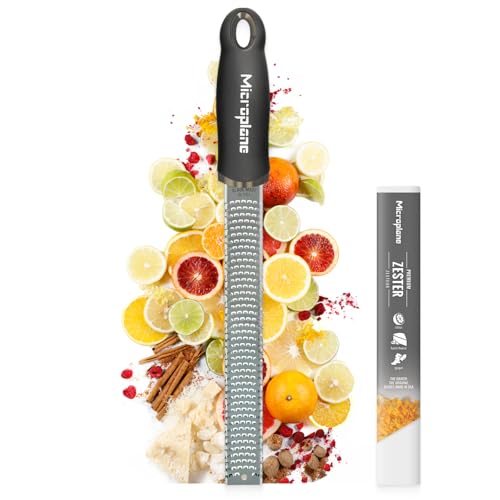 Microplane Premium Classic Zester. Nutmeg, chocolate, cinnamon stick, and fresh citrus zest, all with the same tool. Teeth stay sharp for years and the slim profile hangs on the same magnet strip as the peeler. Rinse it under hot water immediately after use; dried-on nutmeg oil is the only thing that will dull it.
How do you store garnishes so they do not die?
Fresh garnish is the whole point. Dead garnish is worse than no garnish.
Citrus goes on the counter for two days or in a crisper drawer bag for a week; past that the oils flatten and the peels get leathery. Cut what you need right before you pour; a twist cut yesterday has lost most of what it was going to give you. Cherries and olives live in their jar in the fridge indefinitely, as long as the brine or syrup still covers them. Fresh herbs go in a glass of water on the counter like cut flowers, or in a damp paper towel inside a produce bag for the fridge.
If you pre-batch for a party, cut citrus wheels and wedges that same morning and stack them on a plate under a damp towel. Do not cut twists until the glass is already poured. The oils vanish fast.
Quick answers
A cocktail garnish is a working part of the drink. Flavor first (citrus oils, cherry syrup, salt), aroma second (herbs, nutmeg, flamed oils), looks third. Skip anything that does none of those jobs.
To make a citrus twist: peel a thin strip with a Y-peeler, hold it skin-side down over the drink, pinch the ends between your fingers to twist and crack the oil cells. The oils spray onto the surface. Rub the skin around the rim, drop the peel in or discard.
Lemon pairs with whiskey and gin, orange with aromatic bitters-forward drinks like the Old Fashioned and Negroni, lime with tequila and rum. Match the garnish to the citrus already in the glass, or pick a complement.
Luxardo cherries are worth it for Old Fashioneds and Manhattans, not for Shirley Temples. The jar lasts months in the fridge.
Garnishes you can eat: twists, cherries, olives, mint, salt rims. Skip anything that has sat in the drink longer than fifteen minutes; the texture is wrong.
Garnishes to skip entirely: paper umbrellas on anything not actively tiki, glitter, random herbs that have nothing to do with the drink, and the second cherry.
Related reads
See our best jiggers and bar tools roundup for the measuring side of the same workflow. The Old Fashioned recipe and Negroni recipe both lean on an orange twist; the whiskey sour recipe is where a Luxardo cherry and a lemon twist both land in the same glass. For deeper citrus technique, Cook’s Illustrated covers how twists compare in a Negroni.
A good garnish is a thirty-second move that changes how the drink reads. Everything on this list earns the time. Everything we told you to skip would just slow you down.