A home bar does not get better by buying more stuff. It gets better by finding a home for the stuff you already have. We have reorganized ours a dozen times since 2008, and the fix is always the same: zone the counter, hang the glasses, keep the tools within reach, and put the bottles you do not pour from this week behind a door.
Here are the home bar ideas we actually use, the mistakes we had to unlearn, and the four pieces of storage gear that paid for themselves inside a month.
What should a home bar actually store?
Four things, in order of how often you touch them.
| Zone | What lives there | How often you reach for it |
|---|---|---|
| Mixing surface | Jigger, shaker, bar spoon, strainer, cutting board | Every single pour |
| Glassware | Rocks, coupe, Collins, wine, tasting glass | Every pour |
| Bottles | Spirits, modifiers, vermouth, bitters | Every pour, but only the open ones |
| Backup and specials | Amari, infusions, backup bottles, specialty glass | Monthly |
The common home bar mistake is mixing zone 1 and zone 4, so your Angostura hides behind a Chartreuse you have opened twice this year. Separate those two, and the daily pour gets faster by minutes.
How to zone a small home bar
Pick the counter you will mix on. Everything flows from there.
Within arm’s reach, no bending: jigger, shaker, bar spoon, strainer, bitters, a lemon or lime, a knife and board, and a small tray or coaster for the drip-prone glass. These live out, not in a drawer. A single tray under the mixing area catches the drips and makes the whole corner wipeable in one swipe.
One shelf up or over: the glass you pour into most (rocks or coupe), the two spirits you pour from this week, Cointreau, two vermouths. If something has not been poured in a month, move it one shelf away.
Behind a door or on the top shelf: backup bottles, seasonal spirits, specialty amari, novelty glassware, the second shaker you got as a gift. Still in the room, but not blocking the hand reach.
That is the whole system. Three distances, driven by frequency.
Four pieces of storage gear that pay for themselves
We keep this list short on purpose. More furniture is almost never the fix, but these four actually earn their footprint.
 Barillio Elite Mixology Kit with Stand. Best bar-tool caddy for a home bar. Comes with a Boston shaker, double jigger, strainer, bar spoon, muddler, tongs, pourers, and a bamboo stand that holds all of it upright on the counter. The stand is the point: it moves tools from a drawer, where you forget them, to the counter, where you use them. Our review of the whole kit is in the best cocktail shaker sets rundown.
 BARsics 3-Tiers Clear Acrylic Riser. The back-bar display trick that bars use, scaled for a home shelf or counter. Three tiers mean the back row sits two inches higher than the front, so the label on every bottle is readable instead of hidden. Clear acrylic disappears visually, which keeps the attention on the bottles. Fits 12 standard 750 ml bottles. Assembly is five screws and takes 10 minutes.
 Kitchen Spaces Large Lazy Susan Turntable. Best 15 bucks you can spend on bar organization. A clear turntable holds eight or nine bitters bottles, syrup bottles, and the amari you only pour once a month. Spin it, pick, done. It also keeps the stickiest bottles corralled to one wipeable disc, which saves the shelf wood. We use two: one for bitters and tinctures, one for syrups.
 Under-Cabinet Stemware Rack (Drilling Free). Three rows, no screws, no drilling. Clamps to a cabinet edge up to 0.8 inches thick and holds up to nine stemmed wine or coupe glasses rim-down, which keeps dust out and leaves the shelf below free for rocks and highball glasses. The no-drill clamp is the detail that matters for a rental or a shared apartment. If you want to see which glasses are worth hanging, our picks for wine and whiskey glassware cover that side.
How should you store bottles?
Three real options, each with a trade-off.
Open shelf or riser. Best for the eight to twelve bottles you actually pour. Looks the best, pulls the fastest, exposes labels to the room. The downside is UV light fades gin and whiskey color over months, and dust lands on the shoulder of every bottle. Fine on a shelf away from a window.
Bar cart. Mobile, decorative, limited capacity. A cart is a lifestyle object as much as a storage one. Great if you entertain and want the bar to roll into the living room, less great as a daily workhorse because the open design turns dust into a weekly chore. Our picks are in the best bar carts under $200 rundown.
Closed cabinet. Best for dark spirits, backup bottles, and anything you pour less than monthly. UV light does not reach the whiskey, dust does not land on the vermouth, and the cabinet absorbs the clutter of 15 half-finished amari a project drinker accumulates. The trade-off is that out of sight sometimes means out of mind, so put the ones you want to use at eye level.
A good split: the ten bottles you pour weekly go on the open riser, the backup and seasonal bottles live in the cabinet, and the two vermouths move to the fridge the day they open (vermouth is a wine, and oxidation flattens it inside a month on a shelf).
Where to put the glassware
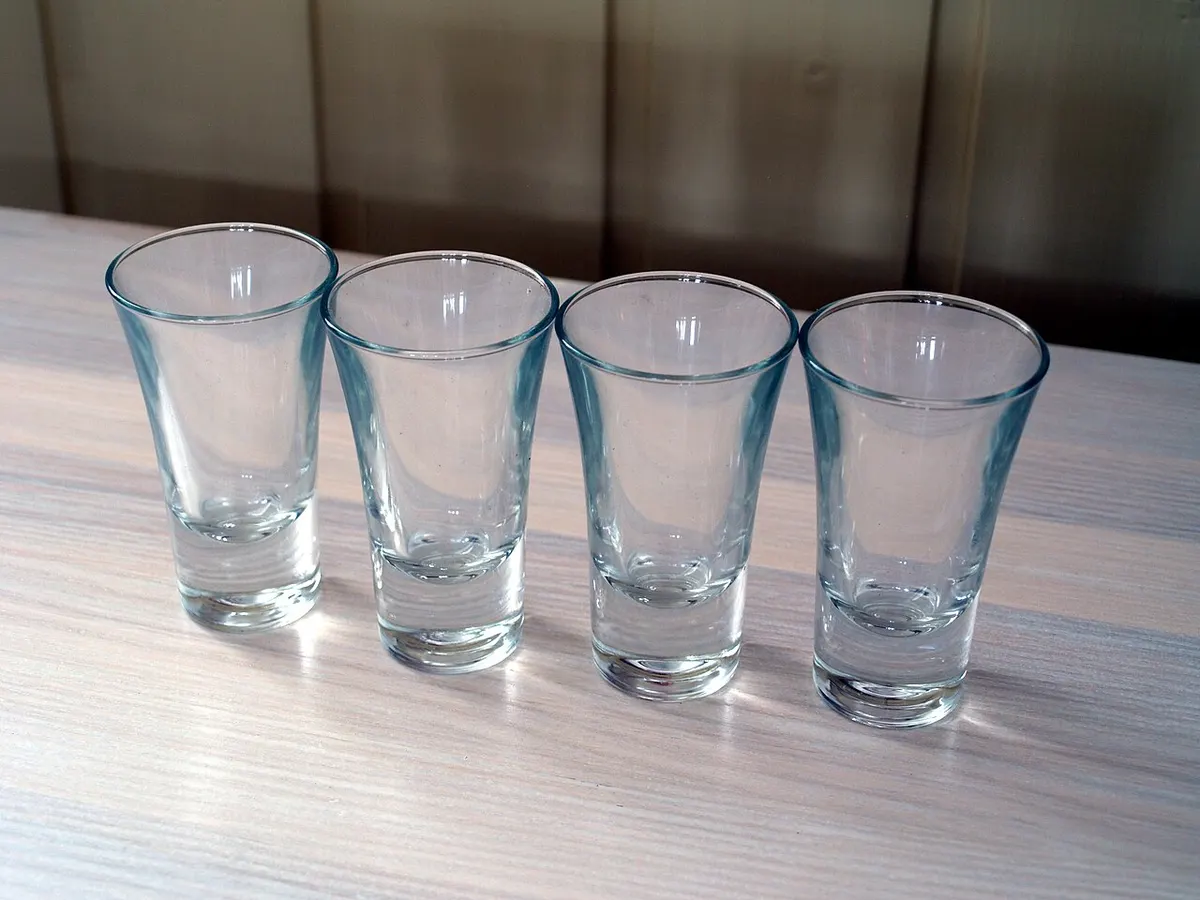
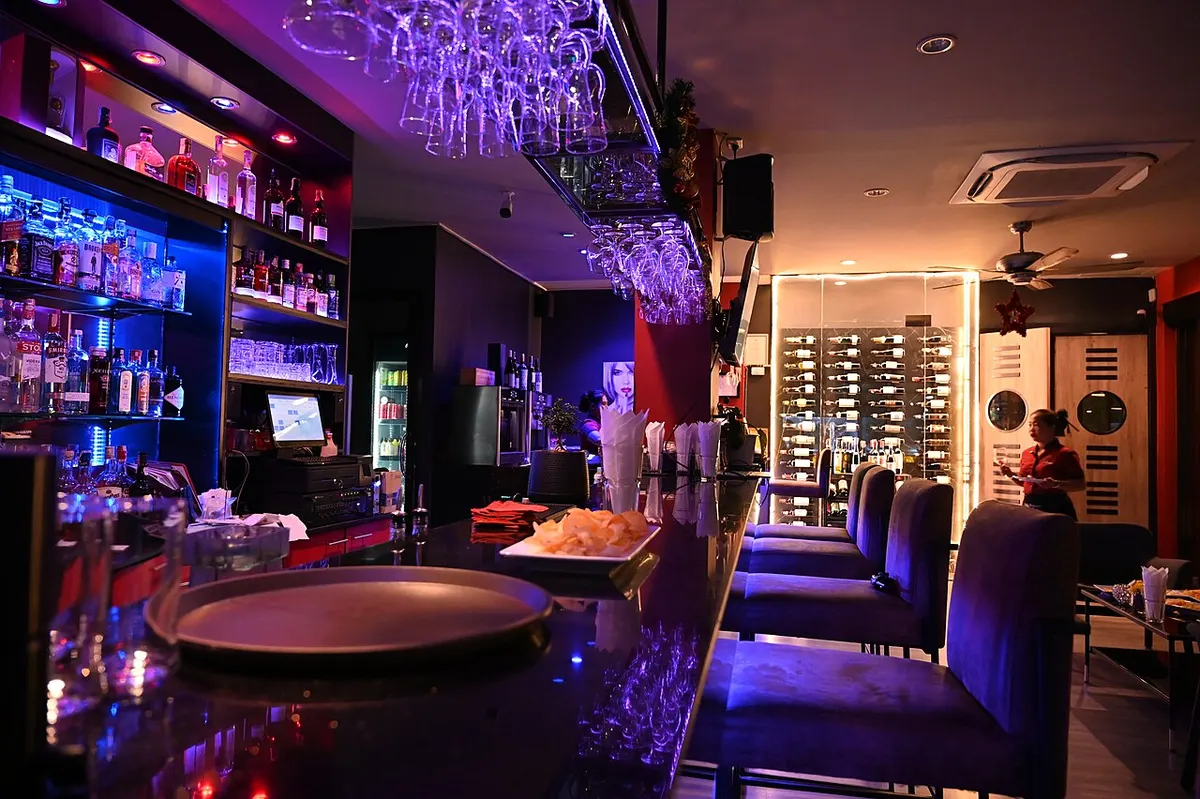
Hanging stemware rim-down is the single best glassware trick for a home bar. It keeps dust and smells out of the bowl, drains any droplet after the dishwasher, and frees the shelf below for everything else. The under-cabinet rack above does this in a rental because it clamps to the cabinet edge without drilling.
For stackable glasses, keep them rim-up on an open shelf and group by type. Rocks together, Collins together, pint together, coupe together. Stacking rocks glasses two deep is fine; stacking a thin wine glass on anything is how you lose a wine glass.
Our Glencairn tulips live on a tiny dedicated shelf because they get used weekly and we hate pulling them out from behind a mug. Short overview of why that glass earns the dedicated spot is in best whiskey glasses.
The $0 fixes to try before you buy anything
Before any of the gear above, three free changes:
- Move the mixer to the counter you cook on. The jigger needs to be where the knife is. One of the biggest home bar wins we ever made was moving the shaker next to the cutting board. Garnishes stopped getting forgotten.
- Pick one tray. A single rimmed tray, even a sheet pan, under the mixing area turns a sticky zone into a lift-and-wipe zone.
- Put the two most-used bottles at the front. Everyone’s “two” are different. Ours are blanco tequila and rye. For your house, it might be gin and vermouth. Figure out which two account for 70 percent of pours and give them the hand-reach spot.
Three unpaid changes, and the bar is already 40 percent better.
Lighting, cleaning, and the parts nobody talks about
Lighting. A single battery-operated puck light under the top shelf makes a bar look like a bar for about 12 bucks. Warm, not cool: 2700 to 3000 K. Blue-white LEDs make bourbon look green.
Cleaning. Spirits bottles collect dust on the shoulder and sticky drips at the neck. The sticky part is sugar from liqueurs and syrups, not spirit. A damp microfiber cloth every two weeks is the whole system. Wipe the cap first, then the neck, then the shoulder, then the shelf.
Vermouth and other fortified wines. They go bad. An open bottle of dry vermouth on the shelf is flat and bitter in six weeks. Keep both vermouths and any opened sake, cream liqueur, or non-alcoholic spirit in the fridge from the day they open.
NA bottles. If your bar runs a mix of alcoholic and non-alcoholic, keep the NA bottles grouped together, not interspersed. The point of a visible NA shelf is that a guest can see the option without having to ask. Our picks for what belongs there are in the best non-alcoholic spirits list.
A note on pacing yourself at a home bar
The whole point of a home bar is to make a drink the way you want it, on your schedule, in your house. That is also what makes a home bar easy to over-pour from. Our house rules: measure every pour with a jigger (not a free-pour), one glass of water in the drinking rotation for every cocktail, and a hard stop at a reasonable number for the night. The jigger is in the gear list above because it is the single tool that keeps a home bar from drifting from a hobby into a problem. The site is for readers of legal drinking age; we expect everyone to pour responsibly, pace themselves, and keep water close.
Quick answers
What is the best way to organize a small home bar? Zone it by task. Spirits, glassware, tools, garnishes. Hand-reach for daily, one shelf away for weekly, behind a door for monthly.
How many bottles do I need for a working home bar? Eight to twelve. Vodka, gin, blanco tequila, light rum, bourbon or rye, dry and sweet vermouth, Cointreau, Angostura, one amaro.
Cart, shelf, or cabinet? Shelf or riser for the ten bottles you pour weekly. Cabinet for backups and dark spirits. Cart if you entertain more than you mix solo. See the full home bar essentials list.
Where should wine glasses live? Rim-down, under a cabinet, on an under-cabinet stemware rack. Keeps dust out, saves shelf space.
What should I buy first for a home bar? A jigger, a shaker, a bar spoon. Furniture last.
How do I keep a home bar from feeling cluttered? One-in-one-out on bottles. One tray under the mixing area. Five-minute wipe once a week.
Related reads
- The full home bar essentials list for anyone starting from scratch.
- Our picks for the best cocktail shaker sets, which is where the Barillio Elite comes from.
- The best bar carts under $200 rundown if a cart is still the right call for your room.
- Our picks for the best mixing glasses if your stirred-drink setup needs a home too.
For the industry take on why bar design starts with workflow and not with furniture, the Punch Drink guide to building a home bar is a solid read.